‘It was a really big help’
‘It was a really big help’
Indigenous Reconciliation Fund supports various initiatives in the archdiocese
A number of Indigenous communities in the Archdiocese of Grouard-McLennan have benefitted from the CCCB’s Indigenous Reconciliation Fund (IRF). It has provided ways for these communities to honour their elders, their history and their culture.
In September 2021, the Canadian Conference of Catholic Bishops committed to raise $30 million over a 5-year period toward this fund, intended for healing and reconciliation programs in Indigenous communities across Canada. All dioceses and eparchies in Canada are taking part in this initiative, to the extent of their ability, and are to raise their contribution locally.
The Archdiocese of Grouard-McLennan was allocated to raise $165,000, (spread over 5 years). Over those five years, the Ash Wednesday Collection has gone towards this portion of the Indigenous Reconciliation Fund. Thus far, there are three projects that have benefited from these funds, and others are now in the process for approval.
We detail here some of the initiatives and events that have benefited from the Indigenous Reconciliation Fund thus far.
Honouring Our Elders Pow Wow, High Prairie
In 2025, $5,000 in funding from the IRF was provided for the Honouring Our Elders Pow Wow, held for the residents and families of the JB Wood Long Term Care Facility in High Prairie. These funds covered the costs of the Pow-Wow’s drummers, dancers and the Master of Ceremonies. JB Wood covered the cost of staff bringing residents to the event and the High Prairie Friendship Center provided snacks and drinks for the participants.
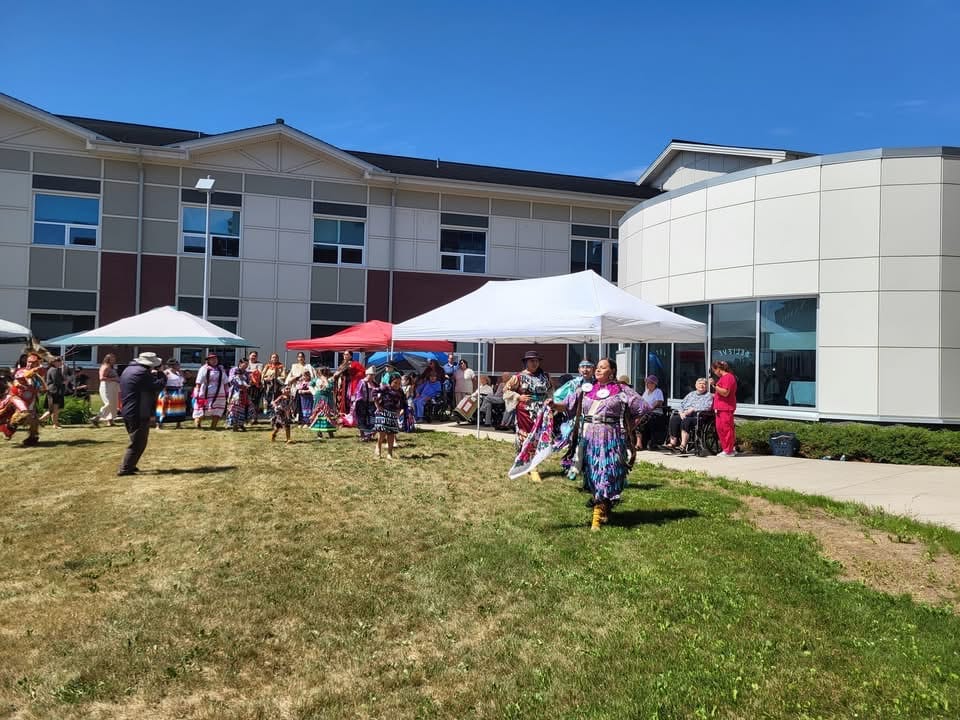
As its name suggests, the pow wow honours the Indigenous elderly residents of the long-term care home, helping them connect to their cultural heritage. The pow wow is held in an open circle outside of the facility, as health and mobility issues would prevent most of the residents from travelling to a more distant location.
“We call it ‘Honouring our Elders’ because we have a few Indigenous elders at the long-term care centre here, and we do it for them,” said Valerie Willier, an employee of JB Wood Long Term Care Facility and an Indigenous Wellness Coordinator with Alberta Health Services. “At our pow-wow we have drummers, dancers and last year – because we had a little bit of extra money thanks to this funding – we were able to offer gifts to the participants and the elders. So it was a really big help.”
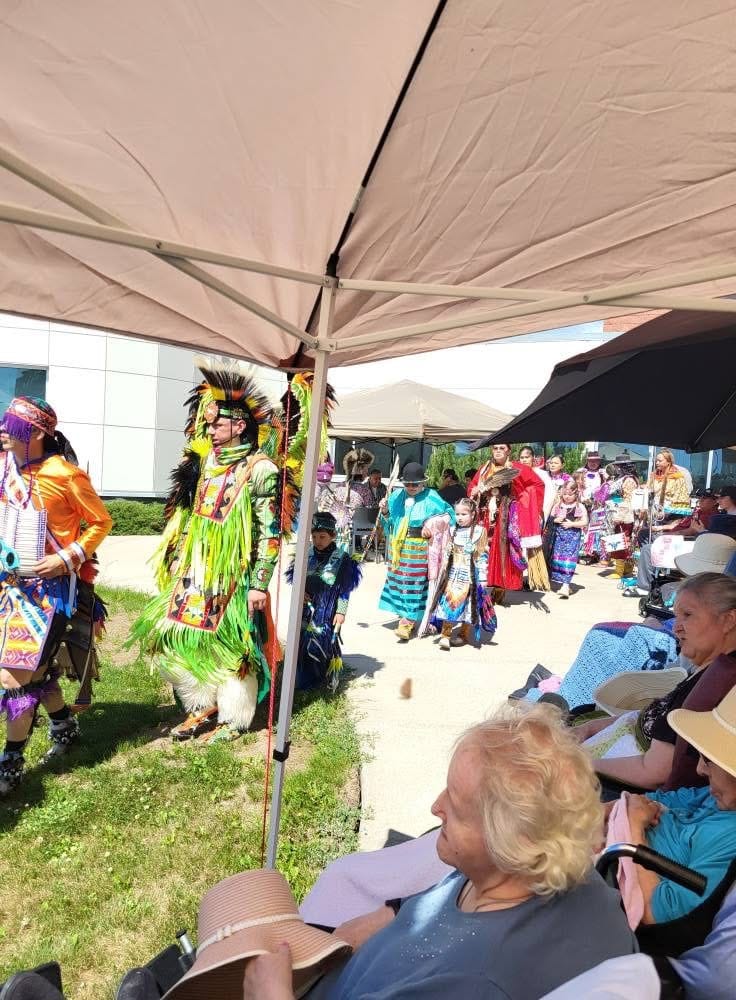
Along with the elders, other residents and staff members of the long-term care centre took part, as well as residents of High Prairie and surrounding communities. Last year, around 60 long-term residents joined for the pow-wow, alongside 100 community members. The dancers and drummers came from High Prairie and surrounding Indigenous communities like East Prairie, Sucker Creek and Driftpile.
The event has been held annually for the past four years, and Valerie notes that the feedback from the elders is always positive. They look forward to it each year, and when they have to postpone it due to rain, they are always anxious to know when it will be rescheduled. She recalls one resident who has since passed, that he watched the dancers with a big smile and stated, “they’re dancing for me”.
By helping these elders connect with their ancestral heritage and traditions – as some had never attended a pow wow until this event – it is an important step in reconciliation. The elders participate in the pow wow themselves through making bannock and offering an opening prayer. Some, if they are able, even get up and dance.
Since the MC provides an explanation for the various elements of the pow wow, it also is an opportunity for non-Indigenous to learn more about these traditional practices.
“It is important to do this for the elders because, with the residential schools, their culture and traditions were taken away, and that’s why we do it for them,” said Valerie. “The dancers will go and shake hands with them and they really like that.”
Valerie stresses that they are very grateful for the funding they received from the IRF, as each year this annual pow wow brings out more and more people from the community.
Vision Quest, Peace River Aboriginal Interagency Committee
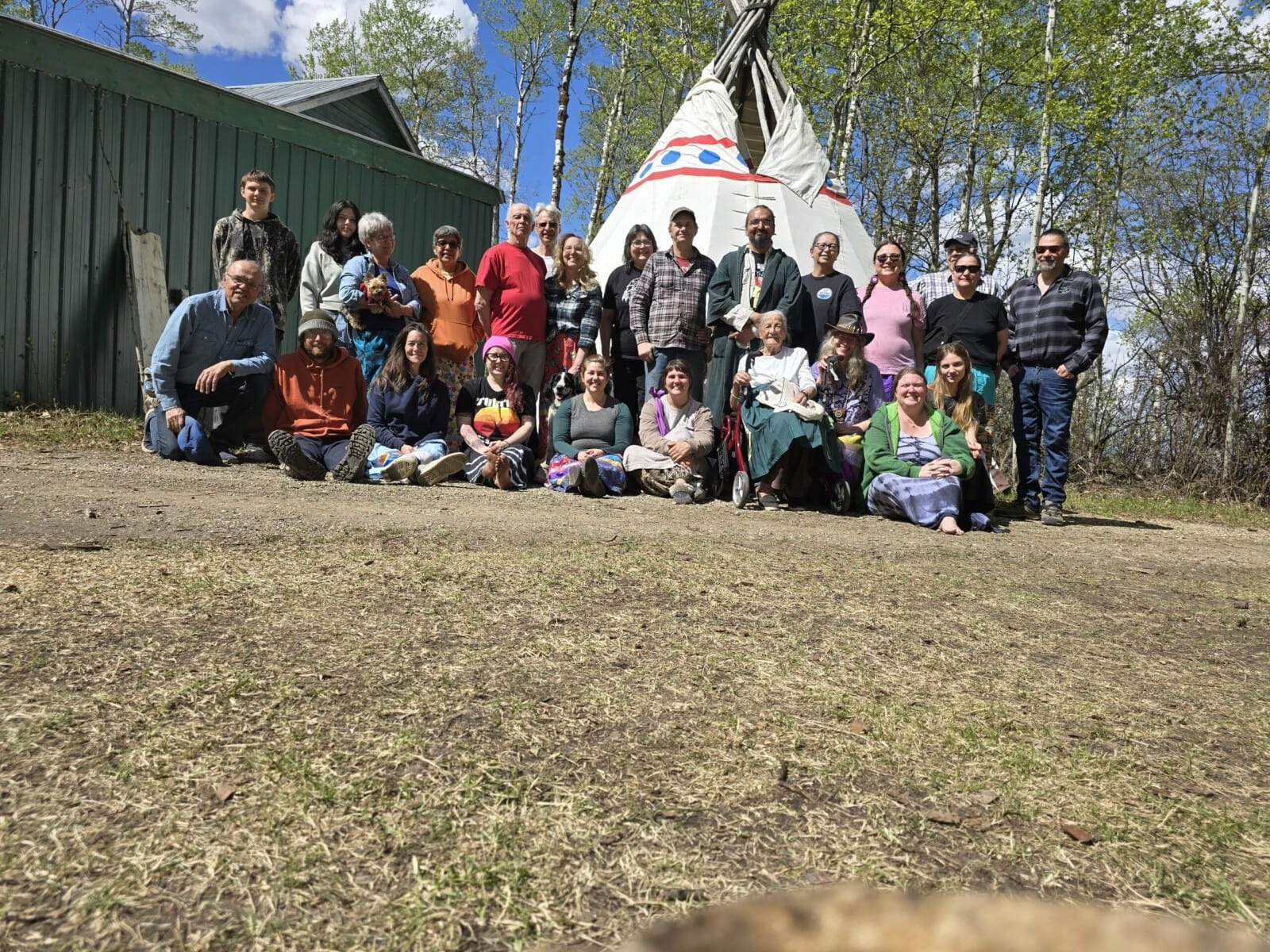
The IRF is also providing $15,400 in funding for the Peace River Aboriginal Interagency Committee’s (PRAIC) annual Vision Quest, held at Camp Artaban every summer. The Vision Quest is a seven-day event which includes a pipe ceremony, a four day fast followed by a feast, a sweat lodge, a sharing circle, prayers, songs, and guided teachings from Indigenous elders.
“It incorporates a lot of our understanding of the Indigenous world,” said organizer Dennis Whitford. “It follows the approach of experiential learning, which is consistent with the Indigenous way of teaching and sharing knowledge – people learn experientially.
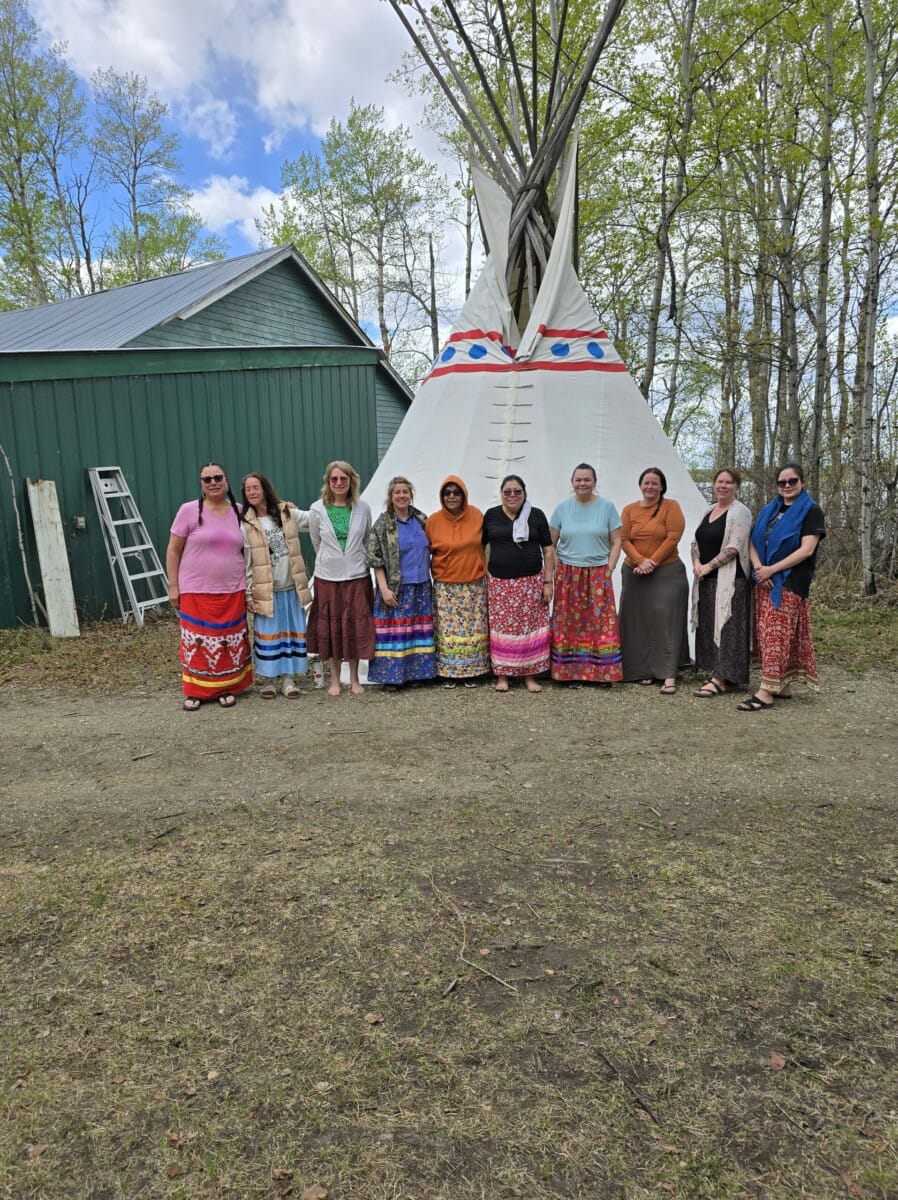
“I brought the idea to take on a Vision Quest event to the [PRAIC] in 2019. It fit in with our committee’s goals – it fosters cultural awareness amongst Indigenous and non-Indigenous people. Part of the awareness we try to convey is that there are a lot of beautiful things about the Indigenous world. Our hope through things like the Vision Quest is to bring this beauty forward.”
The PRAIC includes membership from Peace River, High Prairie, Grande Prairie and other surrounding communities. People from as far as Woodland Cree, Sturgeon Lake, Paddle Prairie and even Little Red River Cree Nation have come to take part in this annual Vision Quest. A Cree elder from Manitoba is usually invited to lead the ceremonies.
It has now been five years that the Vision Quest has been held, and the hope is that it will continue to grow. Last year around 25 people registered for the full 7-days, and students from neighbouring schools in the Grimshaw area visited for one day.
Dennis says the best way to describe the purpose of the Vision Quest is that, like all forms of ceremony, it helps enliven and re-energize people’s spirits.
“It’s similar to our Church teachings, as prayer and the sacraments are also there to lift our spirits,” he said. “Life has its challenges and we all have our moments of struggle. The Vision Quest – through ceremony, through fasting, through supporting and engaging with one another – its purpose in the end is to lift our spirits”
To PRAIC member Wendy Goulet, Vision Quest also has an important cultural impact in bringing Indigenous and non-Indigenous together.
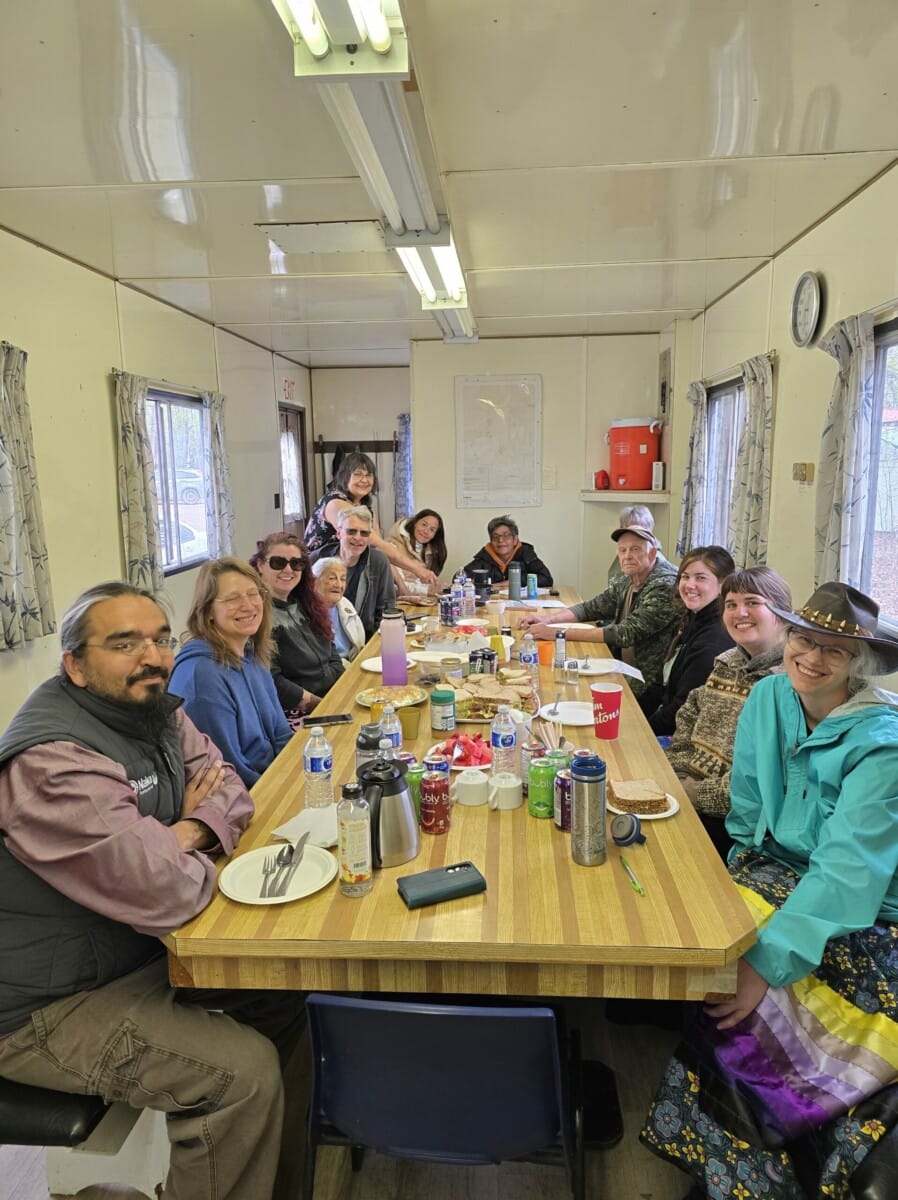
“It provides that opportunity for cultural sharing for Indigenous and non-Indigenous up in the north here, where there is not a lot of people doing ceremony,” she said. “And it’s a good response to the calls to action of the TRC [Truth and Reconciliation Commission] to revitalize our culture.
“We’re very grateful for the funding.”
In past years, clergy and religious have also taken part in this annual Vision Quest. Former Grimshaw pastor Fr. Feroz Fernandez has participated, and Sr. Mary Jeanne Davidson of the School Sisters of Notre Dame also has taken part.
“That was a real gift and bonus to us – that we had members of the clergy who participated,” said Denis. “Sister Mary Jeanne especially really saw the value in it. In the early Vision Quests, I think she had helped secure some funding from her religious community.
“Broadly speaking, everyone comes away describing a positive experience. People who have participated in the four-day fast especially speak of a very meaningful and enriching experience.”
Wendy says it is common for many people to come away from the Vision Quest describing it as a “life-changing” experience.
“Just being out there – next to the sacred fire, the sharing circle, the sweat lodge, the ambiance – you come away feeling so much ‘lighter’,” she said. “Many people come back each year, because they enjoy themselves out there. And having that opportunity for the culture is so important, especially in this area.”
The funding from the IRF helped pay for almost all of the Vision Quests costs, Dennis said. It paid for their elder who led the event, it paid for the renting of the site at Camp Artaban, it paid for food and other needed items. The interagency committee is immensely grateful for the support, and Dennis is putting together a letter to thank the archdiocese for their help in getting the funding acquired.
Cemetery Monument, Grouard
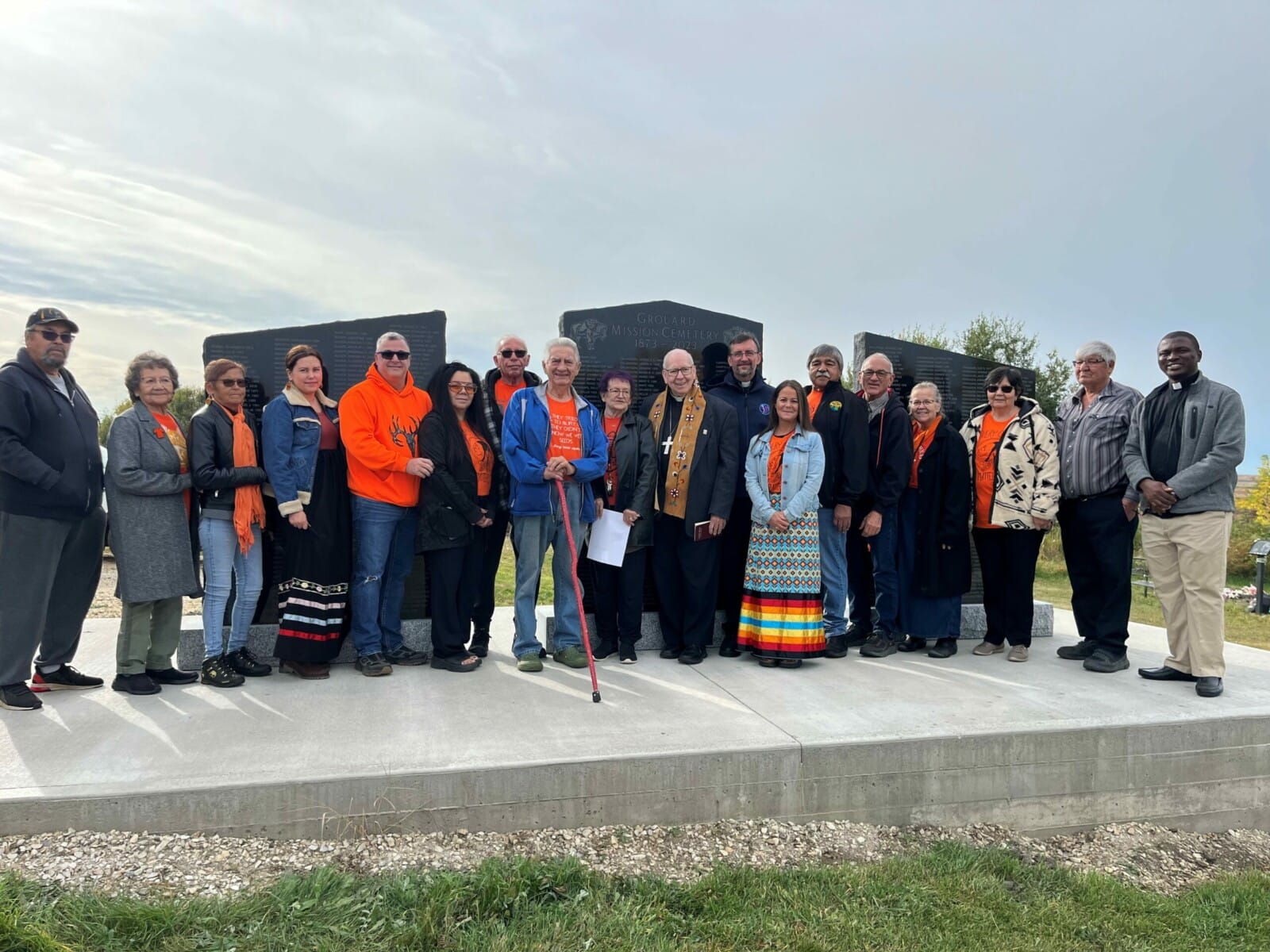
The IRF has also provided local funding for a recently installed monument at the Grouard community cemetery. The monument contains the names of more than 1,500 persons buried at this local cemetery, including 221 people who attended the Indian Residential School in Grouard. The IRF provided $11,050 for the monument.
With markers dating back to the late 19th century, Grouard’s mission cemetery has a long history – much like the community of Grouard itself. A separate cemetery nearby is the resting place of three bishops, as well as several priests and religious brothers and sisters that have served the archdiocese as missionaries.
Thanks to the efforts of St. Bernard parishioner Hector Goudreau and other helpers, the community’s cemetery has undergone a significant clean-up in recent years. It was these efforts that sparked the Grouard Seniors Club to begin efforts towards building a monument commemorating those buried at the cemetery.
This was especially important due to the fact that many of the cemetery’s oldest markings and crosses have deteriorated and been lost over the years.
“There were so many unmarked graves, because over the years crosses got dilapidated and burnt, and there were markers with no names,” said Pearl Sandor, representative with the Grouard Seniors Club that helped lead the project.
With so many of the graves have lost their markers, Ground Penetrating Radar work was done over the cemetery grounds to help detect disturbances in the grounds. At the same time, the seniors club hired a researcher to gather archival documents and information from locals to compile a complete as possible list of all peoples buried in this century old cemetery. This list ensured that the memories of the deceased would be preserved, even if the exact location of their grave has not been located.
The extensive research that went into getting all the names of those deceased in the Grouard cemetery ended up having a personal impact on Pearl. By going through archival records, she discovered that an aunt of hers who had died in infancy was buried in the cemetery – an aunt whose life she never knew about before. Thus, part of her own family history in the Grouard area was revealed by this project.
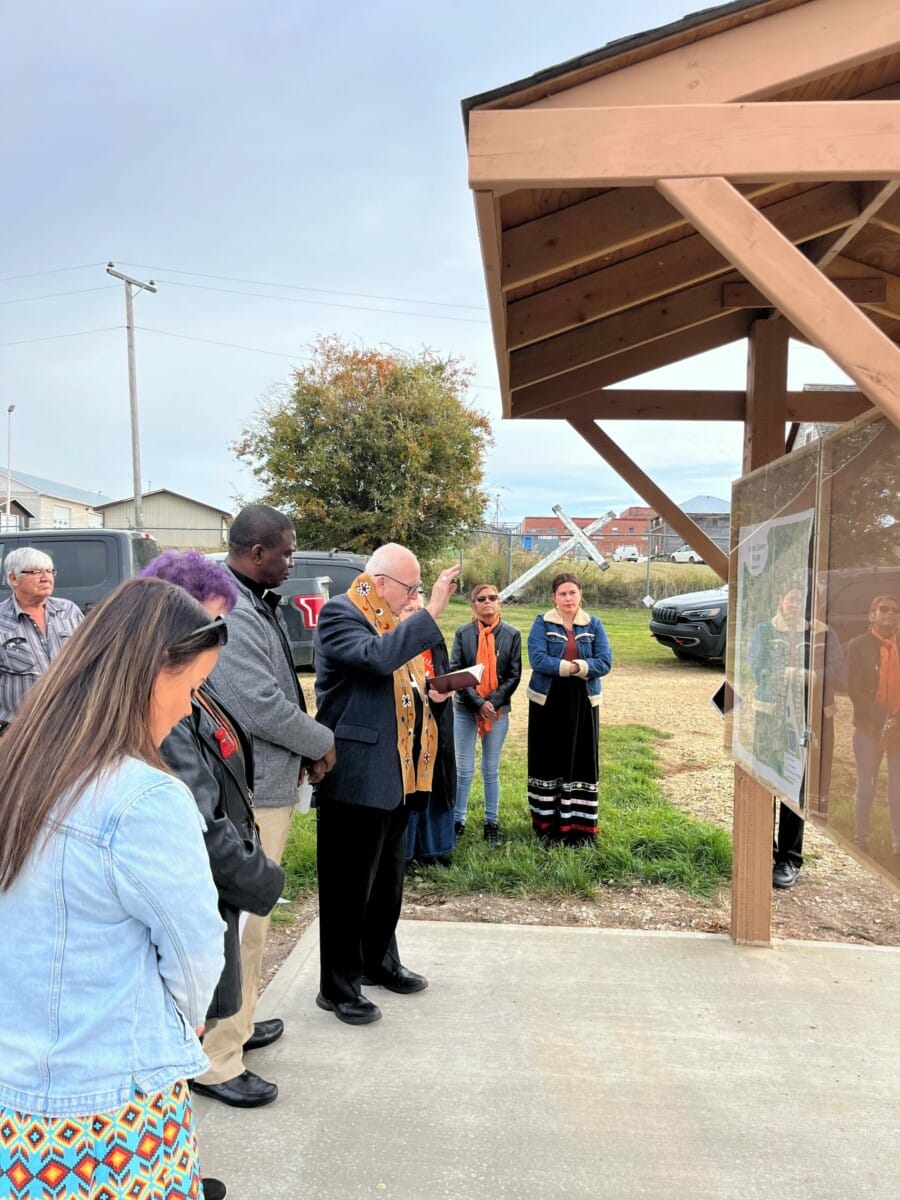
On Sept. 30th, 2025, the National Day of Truth and Reconciliation, the new monument with all the names of those buried in the cemetery was unveiled. Archbishop Pettipas and Coadjutor Archbishop Charles Duval attended the unveiling and offered a special blessing for the Grouard Cemetery monument.
“It was a moment a long time in the making, but we persevered,” Pearl said of the unveiling. “We were just ecstatic and so proud of ourselves. I think the cemetery today is as clean as it has ever looked. It was a very nice project to be involved with. It was very rewarding.”
With so many names detailed on the monument, Pearl says it’s given the Grouard community a sense that their history will be preserved, and the names of their ancestors will always have a place of recognition. Since the cemetery has been cleaned and the monument installed, more people in Grouard spend time at the cemetery, offering flowers and other gifts on the graves of their loved ones.
Given that the Grouard cemetery is likely one of the oldest in the province, the monument will make it an even more recognized landmark and testament to the vast history of this community and its people.
How to apply
These three projects are only the first in the archdiocese to receive funding through the IRF. Others are currently in the process of applying for funding, and there is still more funds available for future projects in our archdiocese.
Organizations looking to apply for funding are to first be assessed by the local Projects Approval Committee (PAC) to ensure the projects follow the grant guidelines, and that they will assist in local reconciliation efforts with Indigenous communities.
The grant applications are reviewed through Indigenous consultation within the PAC, who assess both their merit and local value. The committee is made up of Indigenous persons from around the archdiocese.
The general criteria the IRF looks for in offering funding includes initiatives that offer:
- Healing and reconciliation for communities & families
- Culture and language revitalization
- Education and community building
- Dialogues involving Indigenous elders, spiritual leaders and youth, with a focus on Indigenous spirituality and culture
- Projects must also be in harmony with Catholic teaching
Do you have a program or initiative that may be eligible for funding? Send your enquiries to Julie Slade, by phone at 780-532-9766 or by e-mail at exec.agm@outlook.com