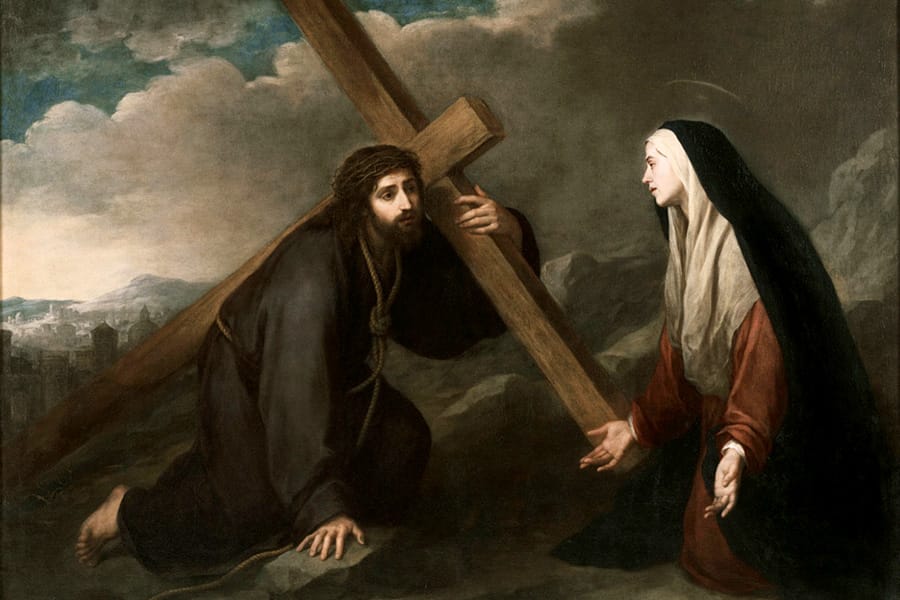
Sacramentum: Carrying our Crosses
Sacramentum is a series devised by the Office of Evangelization and Catechesis, exploring the sacraments of the Catholic Church and other aspects of parish life and Catholic devotion. In this reflection, Rudy Jerome Mallannao studies the meaning of Christ’s call to “take up” our cross daily, and how this call shapes our lives in fundamental ways.
For the March issue of Sacramentum, let us dive into the meaning of “carrying one’s cross”, and how this leads us to a Catholic understanding of resilience, perseverance and hope.
“If you could choose a lighter life—one without betrayal, failure, illness, misunderstanding, or responsibility—would you take it?”
Most of us would hesitate only for a moment before saying yes to this question. Who would willingly choose a burdensome, difficult life? Who would willingly carry a cross? Yet in the Gospel of Luke 9:23, Jesus speaks with unsettling clarity: “Whoever wants to be my disciple must deny themselves and take up their cross daily and follow me.”
Notice the word daily. The cross is not a dramatic, one-time heroism. It is the quiet weight of ordinary, everyday faithfulness. It means showing up when tired, forgiving when wounded, persevering when unseen, loving when it costs, saying yes to God even if the majority say no.
If we follow the logic of comfort and self-preservation, it would lead us to ask: Wouldn’t life be easier without struggle? If suffering is avoidable, isn’t choosing to carry a cross a contradiction of common sense?
But to carry the cross is not simply to endure random suffering. The cross is the intersection between love and sacrifice. It is a suffering that is intertwined with meaning and purpose.
In the Gospel of Mark 8:36, Jesus asks: “What does it profit a person to gain the whole world and forfeit their soul?” To journey without the cross might mean a life avoiding pain—but it might also mean a life avoiding depth. A life engineered only for comfort often remains shallow and superficial. It is a life which survives, but it does not transform.

Our crosses—whether they are family burdens, personal weaknesses, unfulfilled dreams, or responsibilities we did not choose—shape us, transform us and make us resilient. They confront and dispel our illusions of control. They teach dependence on grace rather than on ego.
In the Second Letter to the Corinthians 12:9, St. Paul hears Christ say: “My grace is sufficient for you, for power is made perfect in weakness.” The cross reveals this paradox: weakness becomes the very space where divine strength enters.
Jesus did not come to remove the cross – to remove suffering – from human history; He stepped onto the world and changed the meaning of suffering forever. In the cross, that which once symbolized shame, defeat, and humiliation has become the boldest declaration of love the world has ever seen.
The cross is no longer just a sign of suffering—it is a sign that suffering can be transformed. It tells us that pain does not cancel purpose, that wounds do not erase worth, and that endings are not always what they seem.
And this is where it becomes personal. The cross is also the quiet testimony of survival. It whispers: You endured. You did not give up. You are still here. You are still faithful.
Every time you choose forgiveness instead of bitterness, faith instead of despair, courage instead of retreat—you are living the meaning of the cross. That which tried to crush you becomes instead the place where your strength was revealed.
The cross does not deny the struggle. It declares that the struggle can shape you into someone deeper, freer, and stronger than before. And in turn, this end is what gives you the strength and resilience to endure through your suffering.
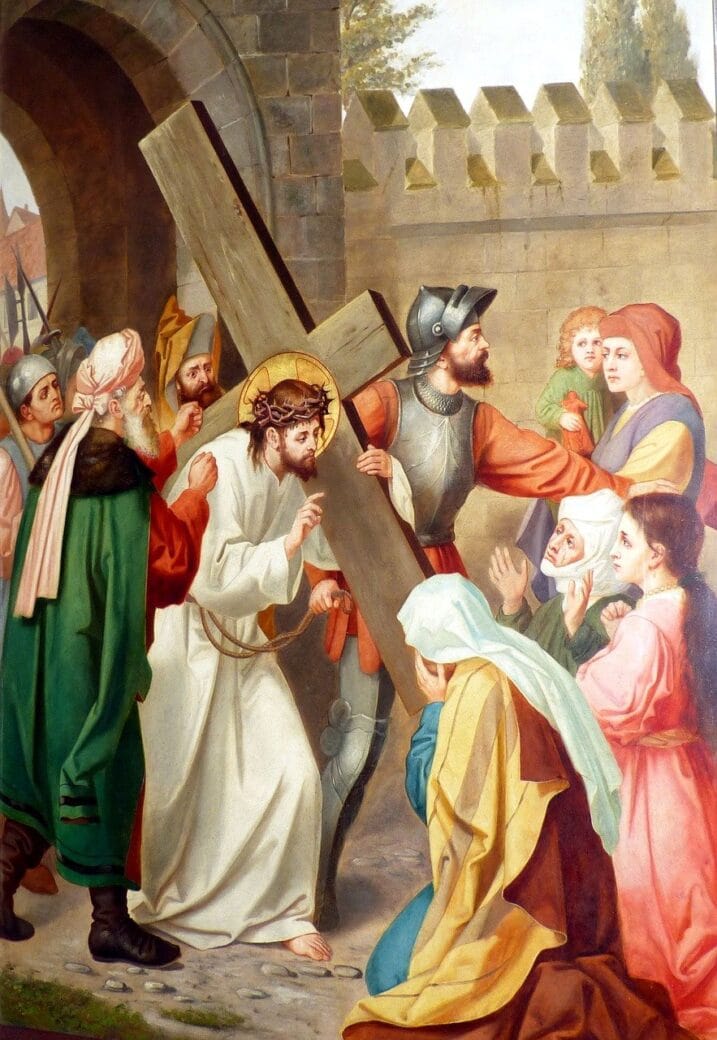
Why Suffer at All?
The cross confronts us with hard questions about the nature and necessity of suffering. It leads us to ponder: Why in this life does growth only seem to come through pain? Why must it come at the cost of suffering?
Christianity does not respond to these questions with a cold and abstract explanation. It responds with a Person. In the Incarnation and Crucifixion, God does not stand at a safe distance from human suffering. He steps into it. In Jesus, He knows what betrayal feels like. He knows rejection. He knows isolation. He knows what it is to be misunderstood, abandoned, and left alone in the dark.
So do not think God is unfamiliar with your pain. Do not imagine that heaven is detached from your tears. Especially in this Lenten season, we remember: Christ has entered our suffering. He has walked the road of loneliness. He has carried the weight of injustice. He has felt the silence.
Which means this—when you carry your cross, you are not the only one who suffers. You are not alone in an indifferent universe. You are walking a path that He has already walked before you, and He is walking it with you. The cross is not just a symbol of suffering. It is the proof that God stands with you in suffering.
We see in this that a Christian understanding of resilience offers something more than mere toughness. Resilience is not suppressing tears. It is not pretending you are unaffected. It is not surviving through sheer willpower.
As the Letter to the Romans 5:3–5 teaches: “Suffering produces perseverance; perseverance, character; and character, hope. And hope does not disappoint us.”
Notice the progression. Suffering is not glorified in itself. It is productive, it is aimed at a higher purpose. The cross is not the destination. It is a passage. It brings forth perseverance. Perseverance shapes character. And character births hope. Lent is a time for us to live out this pattern ourselves, and to do so willingly, not due to some crisis forcing it upon us. We can willingly embrace suffering, so that it may build in us perseverance, character and finally hope.
And so the question returns—not as accusation, but as invitation: Will you choose comfort that keeps you shallow, or the cross that makes you whole? The cross is not meant to crush you, but to carve you—because what shapes may wound you, may also be what makes you capable of deeper love, of ever greater resilience.