The ‘Yes’ that made God visible
Sacramentum is a series devised by the Office of Evangelization and Catechesis, exploring the sacraments of the Catholic Church and other aspects of parish life and Catholic devotion. In this reflection, Rudy Jerome Mallannao discusses the important role of free will in the story of Christmas, and the important role free will must play in our own spiritual lives.
If we already know what is right, then why do we still choose otherwise? On the surface, it seems simple—but it touches the deepest tension of the human heart. We envision patience yet snap in irritation; we crave peace, yet cling to habits that steal it; we imagine ourselves near God, yet drift into shadows of our own making. Day after day, this quiet tug-of-war plays out within us—a hidden drama of free will, where desire and choice dance, collide, and sometimes collide again. It is here, in this tension, that our freedom is tested, shaped, and ultimately revealed.
In this December issue of Sacramentum, I invite all of us to pause and marvel at one of the greatest gifts God has placed in our hands: Free Will. It is a gift woven quietly through the Nativity story—hidden in the trembling “yes” of a young woman in Nazareth, the steady “yes” of a carpenter who chose trust over fear, and even the silent “yes” of shepherds who dared to run toward an unexpected light. These small, courageous acts of assent allowed the Light of the World to break into human history. And in their glow, we begin to recognize how our own personal “yes” to God is shaped, strengthened, and made possible.
Free will is not merely a philosophical idea; it is an experienced reality. It is the space where desire wrestles with discipline, where past wounds collide with future hopes, where grace meets resistance.
Some days it feels liberating, as if our choices can shape an entirely new story. Other days it feels heavy, because the responsibility of choosing lies squarely in our hands. But it is precisely in this vulnerable space of freedom that God chooses to meet us. He does not impose Himself; He waits for the heart to open on its own.
Reconciliation: The Sacrament of the Free Heart
Among all the sacraments, Reconciliation is most deeply connected to free will because it relates directly to our personal choices, our conscience, and nothing in it can be forced. One can be baptized as an unknowing infant, receive Communion while not being aware of the full reality of Christ they are receiving, or be anointed while unconscious—but no one can confess without their direct and personal intent. Confession is the sacrament of deliberate choosing, an act in which we freely acknowledge our failures, freely ask for God’s pardon and freely desire to begin again. It is the sacred moment when God’s mercy and our human freedom look each other directly in the eye. In the quiet of that confessional, we discover that our choices matter to God, not because He needs them, but because He respects the dignity of our freedom.
People often wonder whether our choices are real if God already knows them. Yet our own lived experience tells us that they are. We feel hesitation when faced with a moral decision, regret when our choices harm others, and joy when we choose the good. God’s foreknowledge is not a script forced upon us; it is the loving gaze of One who sees the whole path from above while still allowing us to take each step freely. We are not puppets; we are pilgrims.
Why We Still Choose What We Do Not Want
Perhaps the most mysterious—and humbling—dimension of free will is our strange ability to work against our own happiness. We return to habits that hurt us, cling to resentments that drain us, and sidestep the very healing our souls quietly beg for. This isn’t because we are corrupt at our core; it’s because the will, like any muscle, needs formation. It needs to be stretched, strengthened, and trained to desire what truly gives life.
Jesus speaks directly to this inner conflict when He says, “The spirit indeed is willing, but the flesh is weak.” Our problem is rarely ignorance—it is inner captivity. Sin bends the will; grace straightens it. And nowhere does this gentle straightening happen more personally than in the Sacrament of Confession, where the will slowly relearns its freedom, rediscovering how to choose the good with clarity, courage, and joy.
Advent and the Yeses That Changed the World
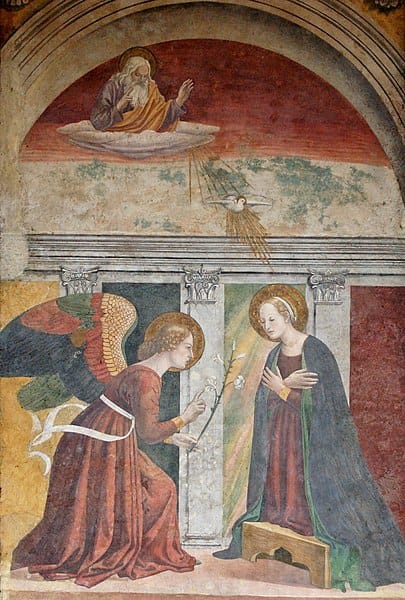
Advent is the season where free will shines most clearly. The Nativity story is woven entirely from human “yeses.” Mary’s yes—courageous and trusting. Joseph’s yes—quiet but steadfast. The shepherds’ yes—simple but sincere. The Magi’s yes—seeking and persevering. In the Annunciation of Mary, in the responsibilities entrusted to St. Joseph, in the call to find the divine child that both the shepherds and the magi followed – all these moments depend on the cooperation of human free will with divine providence, the reply of “Yes” to God’s call. Salvation entered history not through force but through consent, through the open doors of human hearts. And these yeses echo into our own lives, inviting us to ask: what is God asking me to say yes to? What fear or habit is shaping my choices? What invitation from God am I postponing? These questions are uncomfortable but necessary, because our own yes to God continues the story first spoken in Bethlehem.
The Sacrament of Reconciliation is not merely a cleansing of sin; it is a strengthening of the will. It clarifies desire, reorders priorities, and teaches the heart how to choose freely again. Each confession is a small resurrection, a place where we admit not only where our choices have failed but also where our freedom can be restored. In that humble sacrament, we discover we are not trapped by our past choices. Grace returns us to the open field of possibility, reminding us that we are still capable of choosing the good.
As the year draws to a close, it becomes a fitting time to examine the choices that have shaped us. Which decisions have drawn us closer to God? Which have led us toward restlessness, anger, or fear? Which relationships need healing through forgiveness freely given? Which patterns of sin need to be surrendered so that our hearts may breathe again? Above all, we must ask the most difficult question: am I willing to choose forgiveness—for myself, from God, and even toward those who have wounded me?
The Gift Only You Can Open
Free will is God’s boldest gift because He refuses to save us without us. He will whisper, invite, stir the heart, place light along the path—but the final step is always ours. We are saved by God’s grace, but we must also do our part in cooperating with God’s grace. In the Sacrament of Reconciliation, this truth becomes beautifully personal. There, we do not stumble into mercy by accident; we choose it. We freely step into the healing that has been waiting for us, freely claim the grace that restores us, and freely begin again.
This December—when candles glow against the dark winter and the world leans quietly toward hope—may we find the courage to offer God our own small but world-changing yes. For the door of mercy stands open, the Father is already on the threshold, and heaven waits for the slightest movement of our will.
After all, one willing step toward God can redirect an entire life. Amen.