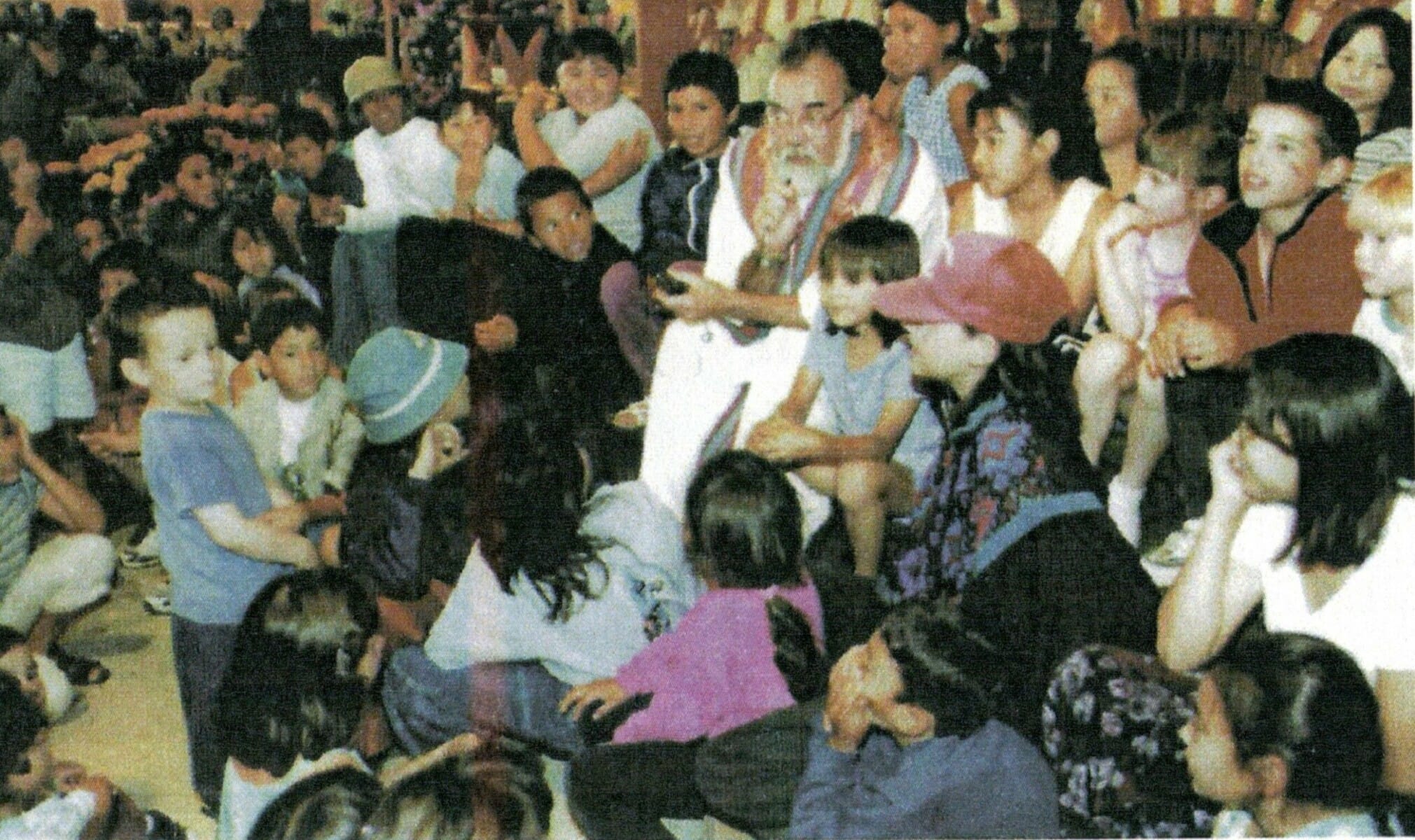
Father Maskwa
The life and legacy of Fr. Paul Hernou continues through those he served
In his First Letter to the Corinthians, St. Paul lays out the life and program of a true missionary. It means being a person who can “become all things to all people, that by all means I might save some.” (1 Cor. 9:22)
One missionary in the history of our archdiocese who lived out St. Paul’s missionary call in a very evident way was Fr. Paul Hernou, better known amongst the people he served as Fr. ‘Maskwa’.
From 1966 to 2006, Fr. Paul served the Cree communities of the most northernly reaches of our archdiocese – beginning in Trout Lake and Chipewyan Lake, then his mission expanded to John D’Or Prairie, Fox Lake and Garden River, and in his final years of ministry it expanded further to North and South Tallcree.
Fr. Paul began his priestly life with the Oblates of Mary Immaculate, ordained in his home country of Belgium with the sole ambition of coming to serve the Indigenous peoples of Canada. And this ambition was one he certainly fulfilled. He was a priest who completely intertwined his own life with those of his flock. He spoke Cree as if it was his own mother tongue; his daily wear was not the typical Roman collar, but moccasins, a hide vest, and a necklace of bear claws gifted to him by the elders he served. He adopted the life, customs and culture of these peoples in hopes that, by doing so, the Gospel would be revealed to them in a way they could fully understand and embody.
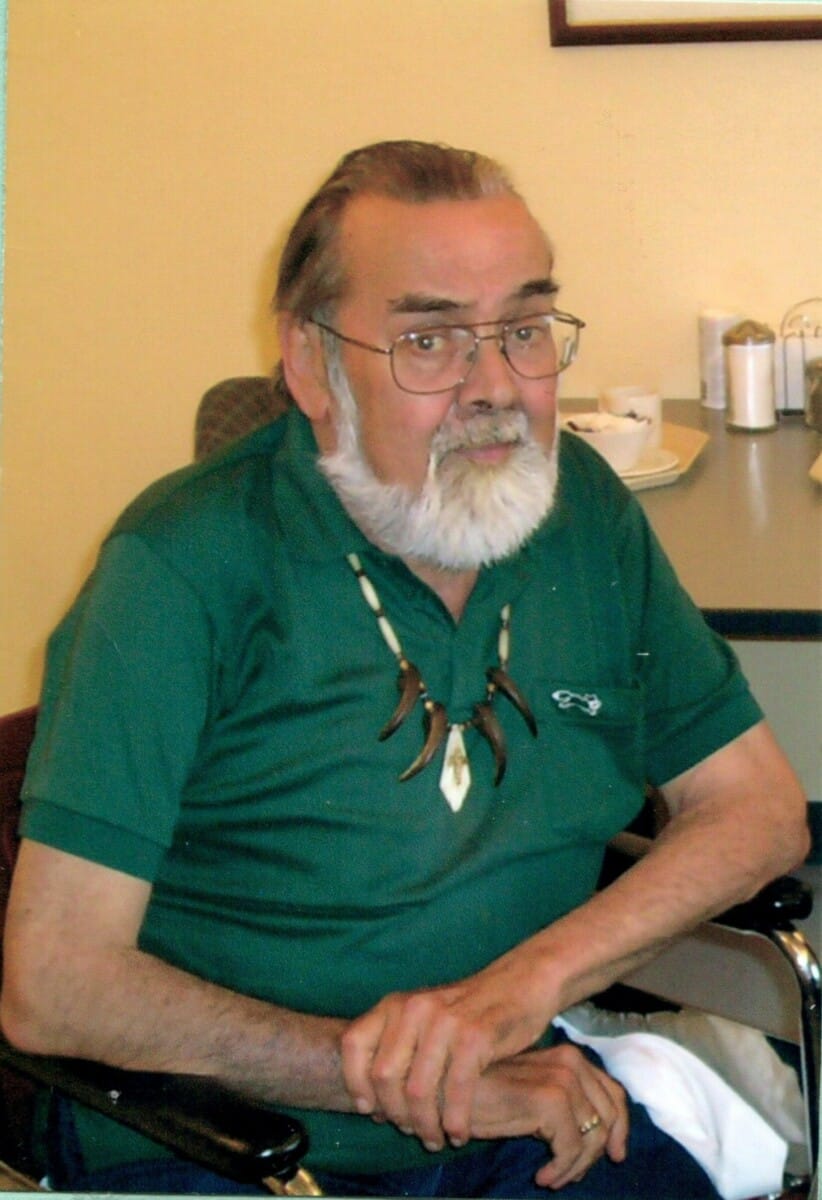
His legacy continues in these communities today, seen in the missions he helped grow, the pilgrimage he helped begin and in the lives he changed. When parishioners like Rhoda Wapoose of Fox Lake reflect on what Fr. Paul meant to her, she notes that it feels as if God had sent him just for them.
“Everything about us he incorporated into the Church. He would say his Mass in Cree. He wore a stole that my mother made him – beaded and made out of moosehide. He participated in our ceremonies and he sang our songs. He incorporated himself, our church, all within our own culture and our traditions,” Rhoda reflected.
“And we welcomed him as one of our own. We didn’t look at him as an outsider. He was part of Little Red. He loved that we lived a simple way of life, and he wanted to strengthen our belief in the Creator. He wanted to open wide the door to the Church for us, and that’s what he did.”
In learning the details of Fr. Paul Hernou’s life, one can’t help but be perplexed at how a man comes to embrace such a life as his: to move from his home country, culture and people, and come to the northern, blistering cold climate of Canada, a place where he knew not the language, culture or people – all for the singular purpose of bringing the Gospel to a distant and foreign land. One may expect such a vocation must be only for the most holy, saintly and zealous of persons.
But through reading the letters and archival documents pertaining to Fr. Paul’s life, it becomes clear that, in tracing his childhood origins, Paul Hernou was perhaps the last person one would expect to take such a pious missionary path in life.
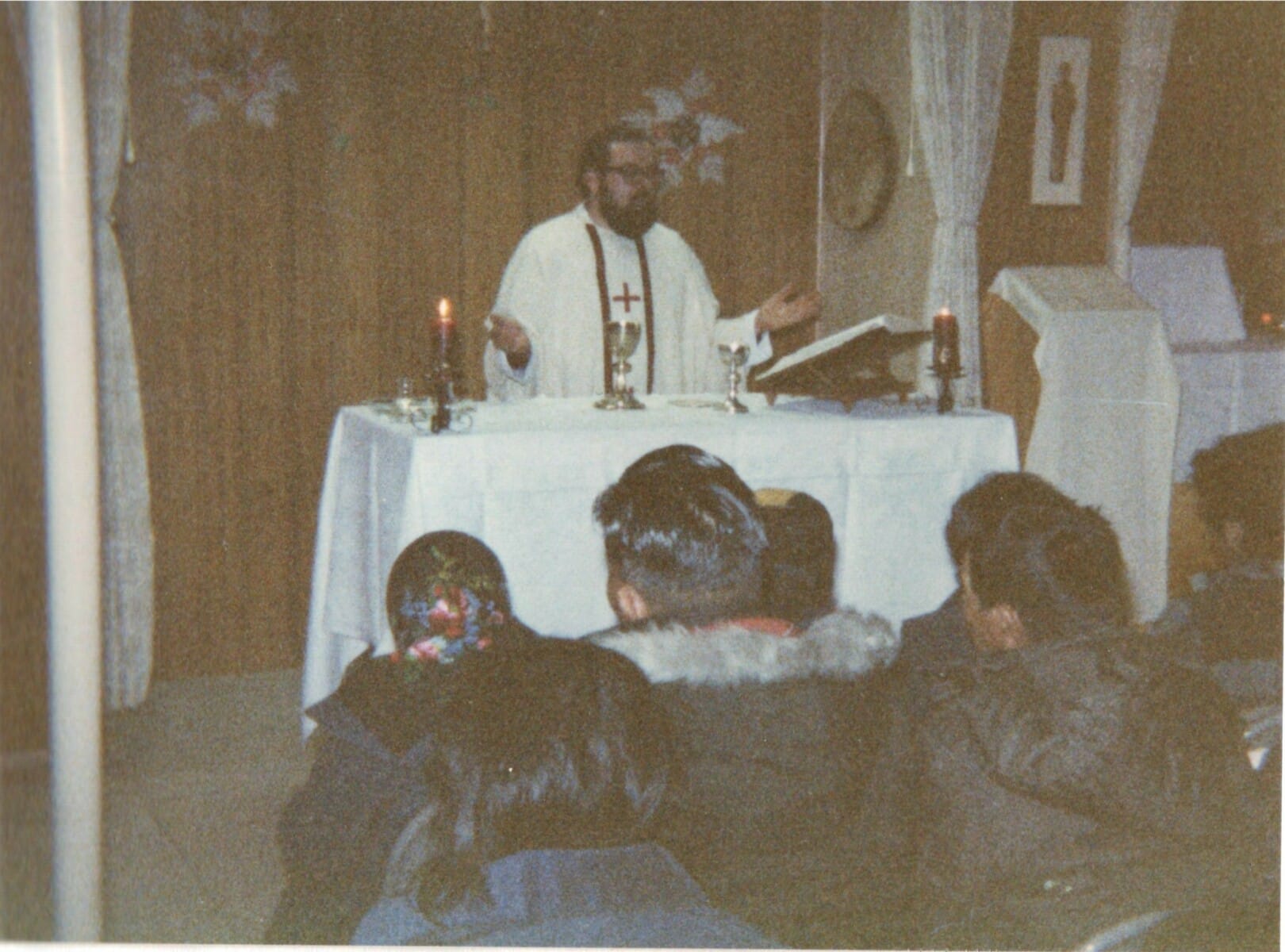
Those who knew Paul in Little Red River would often note that, when he talked about his childhood in Belgium, it was usually as part of a sermon on how children ought not to behave. And Fr. Paul himself once reflected that, as a child, he had the reputation of being a “good for nothing.”
“He didn’t talk much about his life in Belgium, other than he’d tell us when he was younger he was a real rebellious lad,” recalled Steve Auger, an elder of John D’Or Prairie who was close with Fr. Paul.
In an interview with Catholic Missions in Canada, Fr. Paul even admits that if he had the chance to skip the class which led him to the priesthood, he likely would have taken it. But clearly, providence had other plans in mind.
To understand the vocation of Paul Hernou one must first come to know a bit about his predecessor, another missionary Oblate from Belgium named Fr. Rogier Vandersteene, OMI. Fr. Vandersteene was a zealous priest who dedicated much of his life to serving the Cree peoples of northern Alberta. He came to Canada in 1946 to take part in the Oblate mission to evangelize the Canadian west, and he fulfilled this ministry over the next 30 years of his life.
In 1958, after a decade in northern Alberta, Fr. Vandersteene was given the opportunity from his superiors to take a vacation and to visit his home country. A testimony to the zealousness of Vandersteene’s missionary spirit is seen here, because this vacation, his only time off in over a decade, was to Vanderesteene just a way to try and recruit more vocations to the Oblates’ mission. With the permission of his superiors, he visited numerous parishes and schools across Belgium to talk about his life as a missionary, and to ask people to pray for vocations.
Fr. Vandersteene’s religious superior later wrote about his trip, that “by his outstanding rhetorical eloquence, by his candid openness and his artistic talents, [Fr Vandersteene] was in Providence’s hands the instrument qualified to arouse Oblate vocations…”. Paul Hernou would be a living testimony to the truth of these words.
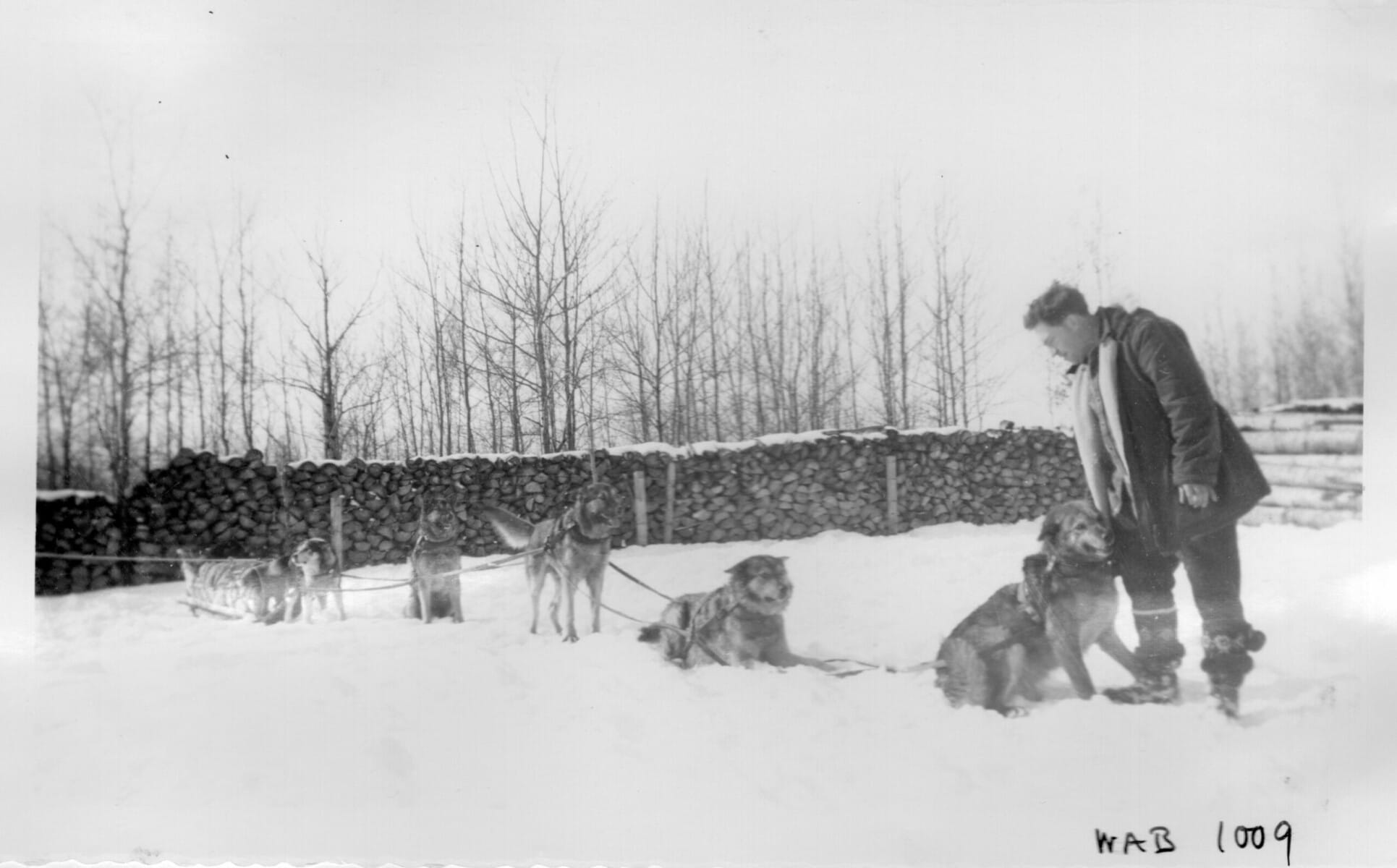
Hernou was a high school student in Bruges when Vandersteene showed up to his classroom. The priest spoke of life in the Canadian north, how he came to serve the people and learn their language, and his mission to share the Gospel with them. He detailed how life in such an isolated and harsh climate was tough, and anyone willing to embrace such a vocation had to have the necessary gusto and grit to handle it. As Fr. Paul later recalled of his speech, Vandersteene said missionary life was not for “skirt-tugging mama’s boys”.
Vandersteene stated that Canada would soon face a shortage of priests, and so he asked the students not to donate money to their missions, but to pray and ask God if He might be calling them to be a missionary in Canada.
Hernou was moved deeply by the priest’s testimony. He later reflected that when Vandersteene spoke, he “heard the call of the Lord to come and work among the native peoples of Canada.” This touch of grace and calling from God forever changed the direction of his life.
It was tough to believe a boy like Paul Hernou could make such a bold decision. According to a Catholic Register article from 1986, when Hernou told his high school classmates that he planned to pursue the priesthood after graduation, the principal responded by suspending him for four days, suspecting this was a crude joke meant to mock the priesthood. This anecdote clearly shows that the teenage Hernou did not have the pious and holy reputation one would expect from such a zealous missionary.
Little did this principal know, Paul would be a testimony to the power of conversion, to the ways in which God writes straight with crooked lines, and to the immense heroism and humility a man is graced with when he accepts the call of God.
After Vandersteene’s visit, Paul soon started up a correspondence by mail with the priest, and that sense of a calling to follow in the missionary Oblate‘s footsteps never left his heart. He entered formation with the Oblates after completing high school, with the stated desire of becoming a missionary for the Cree people of northern Canada.
Hernou was ordained to the priesthood in February of 1966, and seven months later he moved to Canada and made his way to Trout Lake, Alberta, where he would learn under the tutelage of Fr. Vandersteene.
This is only an excerpt. Read the full story in the November 2025 edition of Northern Light