A look at financial challenges faced by our parishes
In Article One, we did our best to present the financial reality the archdiocese faces – past, present and a little foresight in the future. We want to be optimistic more than pessimistic as we forge ahead, and, with that, by this series of articles, present an honest and transparent report of our financial reality.
In this article, our aim is to present the challenges the parishes, quasi-parishes and missions are facing today and in the proximate future. A second focus of this article will be to try to identify what is a ‘healthy parish’ and what our ‘healthy parish’ study will further identify for each parish, quasi-parish and mission. As a first step, let us see how the archdiocese defines a parish, a quasi-parish and a mission.
A parish has a resident pastor; it has at least 200 registered parishioners or 50 Catholic households and/or is financially self-sufficient; and it has a functioning parish finance committee (PFC) and/or a parish pastoral council (PPC).
A quasi-parish is lacking in at least one of the characteristics of a parish, and is aligned with a parish, whose pastor is also the pastor of the quasi-parish.
A mission may have a resident priest; is financially dependent on the Archdiocese, and has not or finds it difficult to establish a PPC or a PFC.
The Code of Canon Law (515 §2) stipulates that it is the diocesan Bishop who establishes, alters or suppresses parishes, after having consulted his Council of Priests.
As mentioned in the previous article, there is a sort of ‘perfect storm’ of financial challenges parishes, quasi-parishes and missions face today. From inflation and the rising costs of insurance premiums, utilities and repairs, and the decline in parishioner attendance and donations made to the local parish churches, the outcome can at times seem bleak.
We recently spoke to a number of parishioners from varying parts of the archdiocese, who are involved in welfare of their churches, to get a sense of what they are challenged with. For most people, the biggest obstacle in costs has been the rising cost of insurance and utilities.
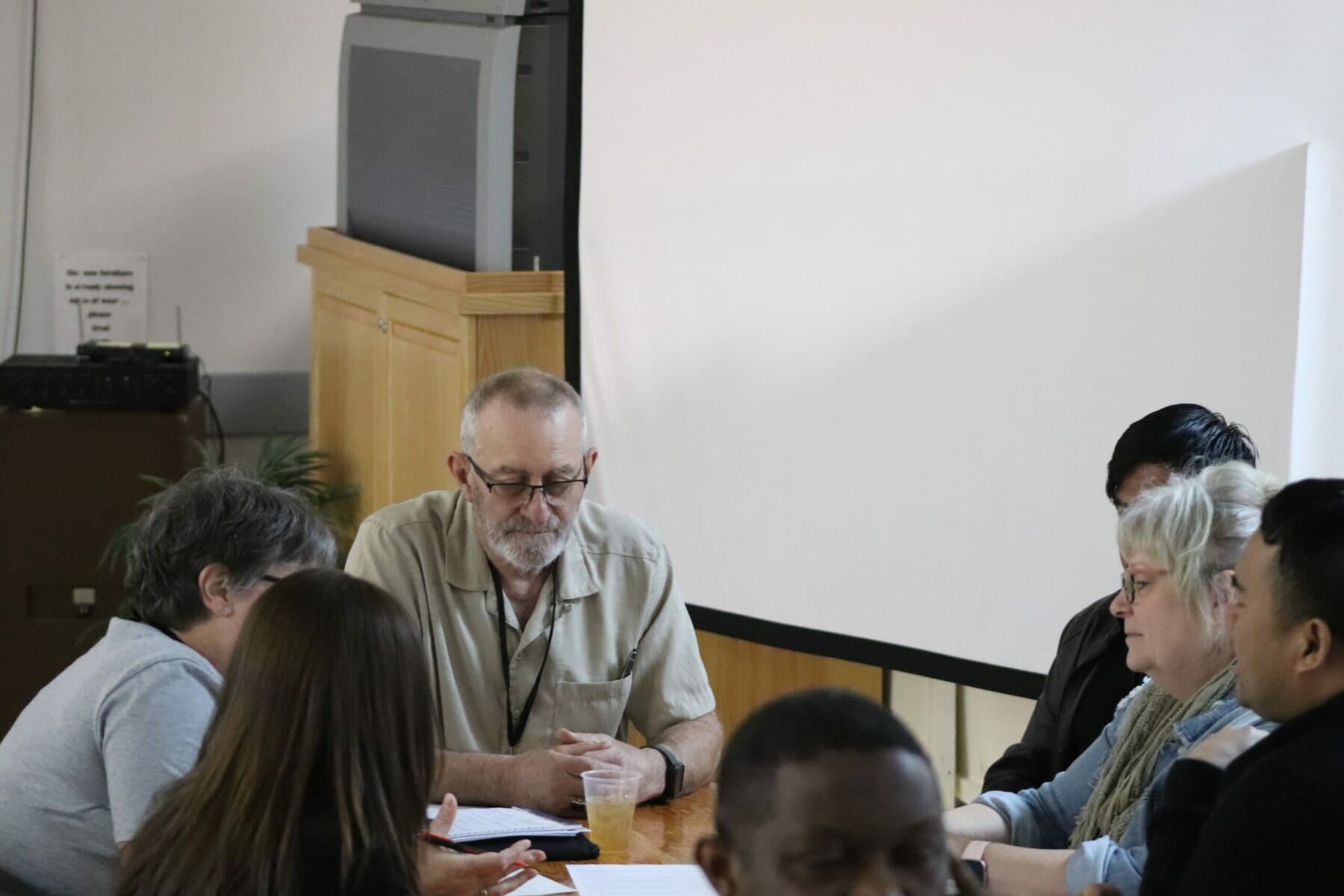
As Richard Simard, a parishioner at Ste. Anne’s Parish in Falher, notes, since the time of Covid-19, the insurance costs for his parish have nearly tripled.
“Before the pandemic, I think we were paying around $9,000-$10,000 in insurance a year. Now we are at about $24,000 a year,” Richard said.
Bradley Sakundiak from Immaculate Conception Parish in Sexsmith, who has recently joined his church’s PFC, has seen similar increases in insurance for their parish. Further, Bradley says that with the financial stress on households, it is more and more difficult to encourage parishioners to donate to their parish. Bradley adds that the parish loses more than it gains each year in both the people in the pew and in donations.
“Yet, people are generous, as generous as they can be, but with the rising costs, it definitely gets harder to keep up,” he said. “Our parish deficit varies from year to year, but I would say that we are in the red anywhere from $2,000 to $10,000 each year.”
Even parishes that are not dealing with deficits are still feeling an ever-tighter restrain on their finances. Bernard Fedorowicz has been part of the PFC at St. James the Major Parish in Manning for the past 10 years. He notes that, while his parish has not run a yearly deficit and has stayed ‘in the black’ (meeting their expenses each year), it is becoming more difficult to ensure that the balance between the income and the expenses remain in place.
“Typically, we’re running into the same issues other churches are running into. Our expenses are increasing but our income isn’t matching that increase, which just makes it ever more challenging to meet everyday operating expenses,” he said. “We don’t run deficits but it’s tightening up all the time and we have to be more careful about what we can do as a parish.”
Another concern noted by Richard in Falher has to do with the post-pandemic reality: “The biggest thing for us was COVID. Before COVID we had 80 to 90 regular parishioners every Sunday, but now we are down to about 50 people on average. That is a drop of 20 to 30 people and is a major number for a small parish like ours.
“Today, it is mostly seniors that have come back, and the younger crowd have stopped coming. We struggle to understand why or how to get them back”, he laments.
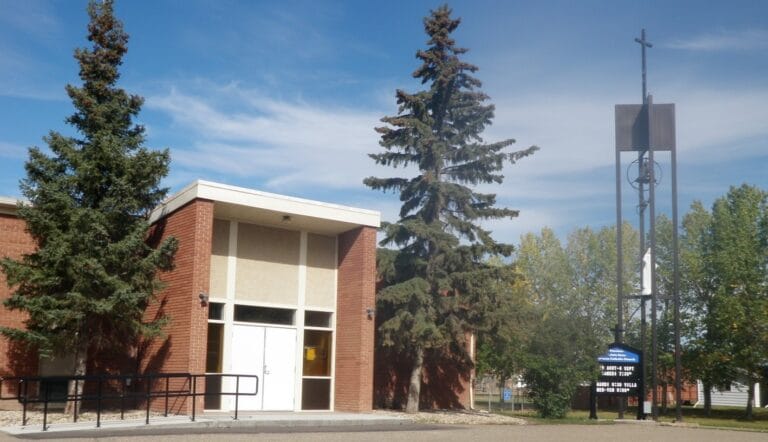
Another unique challenge some parishes are facing is in keeping up with necessary repairs and maintenance. Most of our churches and rectories were built several decades ago. Regular maintenance and repairs are an increasingly arduous burden. It is one concern Immaculate Conception Parish in Sexsmith is facing due to water damages and mold.
“The church building itself is over 75 years old. With that comes a lot of maintenance and upkeep. It can be hard to find the finances for repairs,” noted Bradley.
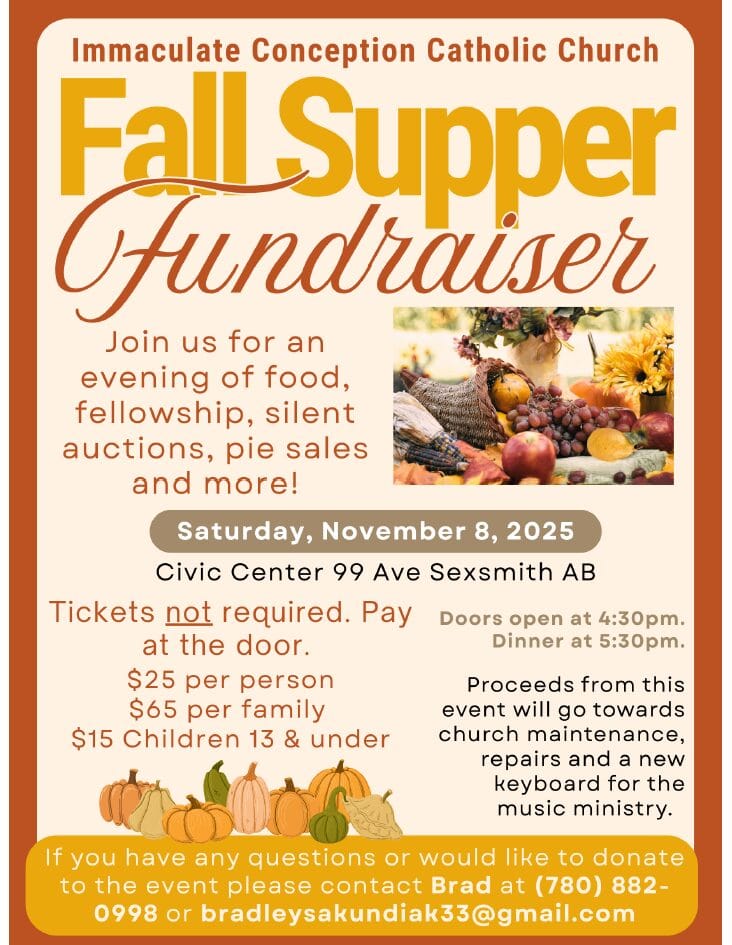
One of the ways Sexsmith parish is trying to tackle these financial challenges is by increasing their fundraising efforts. The parish does three major fundraisers each year: a highway cleanup, a parish garage sale and a Fall supper – the latter being their major event. The Fall supper usually brings in about $4,000 for the parish.
“For last year’s supper, parishioners really promoted the event and we made over $12,000. That really helped! We used some of those funds to fix the bathroom in the rectory and to upgrade the sound system in the church,” he said. He hopes that their 2025 Fall supper, coming up on November 8th, will do as well.
Ste Anne’s Parish in Falher also holds a couple of successful fundraising events annually. Thanks to both a cash calendar fundraiser and an annual bake sale, Richard Simard says the parish was able to meet all of their expenses for the past two years.
“Our first year, these two events netted us $7,000, and every year since, that total has increased. Thanks to these efforts, we have been clear of annual deficit and event were able to make a profit. In the last couple of years, I’ve been making sure to talk to the people about our finances and stress how we need people to step up and do more,” said Richard. “Since then, we have had more big donations from people and some have been giving more in the collection basket.”
Another initiative the Falher PFC and PPC are looking at is to drop their insurance rate to a ‘partial coverage’ noted Simard. While full coverage insurance typically covers the entire property value for a building and all potential risks, partial insurance covers only some of the property’s value and only some potential risks and liabilities. Richards notes that this switch to partial insurance could save the parish as much as $13,000 per year.
Other parishes are also looking at the possibility of moving to partial coverage for their insurance. Another consideration is to formulate a realistic annual parish budget that correlates with the parish’s income. Regular monthly or quarterly reporting to the parishioners is also important, as well as presenting an annual finance report which provides transparency and creates trust.
The Mission – More than Finances
Of course, the life and wellbeing of a parish cannot be reduced nor measured only by its finances! The primary Mission of the church is pastoral, spiritual and sacramental. As Jesus commissioned his apostles in Matthew 28: 19-20: ‘Go therefore and make disciples of all nations, baptizing them in the name of the Father and of the Son and of the Holy Spirit, and teaching them to obey everything that I have commanded you.” (NRSV, Holy Bible, CCCB 1991)
We are all aware of the decline in church attendance. This is not just a local diocesan problem, it is a problem being felt across the country and in many parts of the Western world. The post-COVID reality, as noted, also reduced the numbers of attendees. With a realistic look at our diocese, it is evident that a majority of our parishes, quasi-parishes and missions are in very rural locations and, in many cases, great distances apart. The number of families have declined in many places, and the number of children born to a household has also diminished. This is visible in farming communities where, a few decades ago, there was a farm family at the corner of ever other mile. To each of these families were raised five or more children. That is no longer the reality. Farms have become ‘Corporations’ and businesses. In today’s world, success is measured by the dollar and not so much with ‘gratitude’ and ‘praise’ to the Almighty.
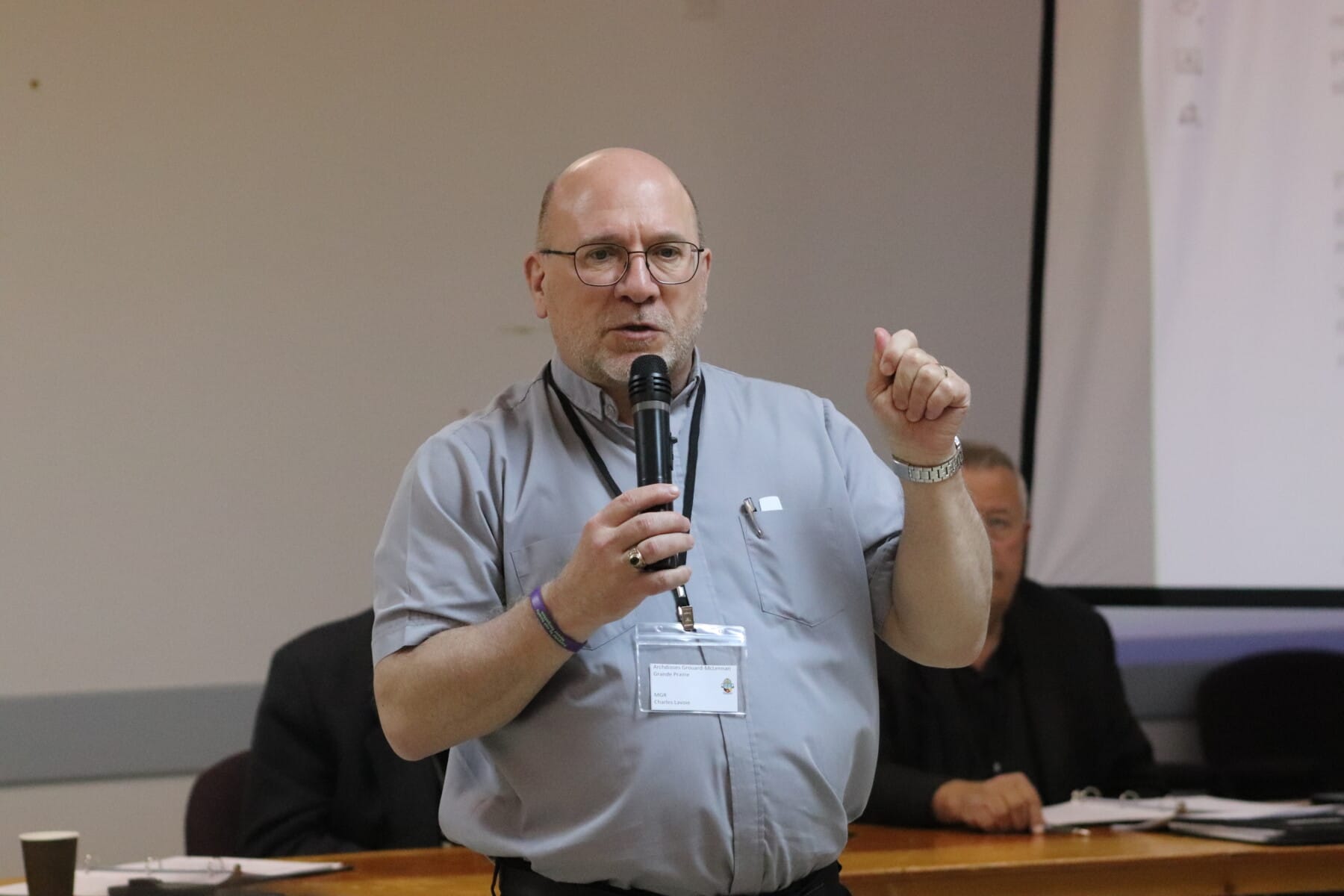
We are also living in a time when cultural norms have greater influence than religion and faith. We are seeing the decline of a sacramental life: less children are being baptized and catechized. There are fewer sacramental marriages taking place; the option is resort weddings, backyard weddings or common-law unions. There has also been a noticeable decline in children receiving the sacraments of initiation, Baptism, Holy Eucharist and Confirmation. Celebration of the Sacrament of Reconciliation is very low. Church funerals with respect for the deceased are also disregarded in favor of graveside services or nothing at all.
This is all of great concern to the Church, and so, as a Church, we must renew our commitment to the Mission entrusted to us. ‘Go therefore and make disciples of all nations, baptizing them in the name of the Father and of the Son and of the Holy Spirit, and teaching them to obey everything that I have commanded you.”
Earlier this year, the Curia (close advisers to the Archbishop) developed a questionnaire that was circulated to all of our church communities in June. We named this project the “Healthy Parish Report”. The purpose of this initiative is to better grasp the realities, challenges and strengths each community is presently facing. When it comes to the pastoral and financial health of our parishes, it will help the archdiocese to develop and initiate a new Archdiocesan Pastoral and Financial Plan.
As a final note to this article, it is important that we build on collaboration, trust and transparency. We pray for the guidance and inspiration of the Holy Spirit and the intercession of Saint Martin of Tours to assist us in fulfilling joyfully the mission Christ has entrusted upon us.